ALANYA MUSEUM OF ARCHEOLOGY and ETHNOGRAPHY
Alanya Archeology Museum was opened in 1967 with its archeology and ethnography sections.
With the artifacts belonging to Bronze Age, Urartu, Phrygian and Lidian Eras that were fetched from Anatolian Civilizations Museum in Ankara and the items unearthed by the excavations in the region, the museum has enlarged and enriched.
The Section of Archeology
The oldest work of art which was found in the region of Alanya and is exhibited, is a stone epitaph in Phoenician language in 625 BC.
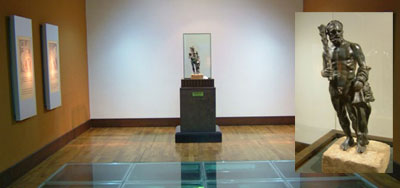
The most significant item which has become the embodiement of the museum is the sculpture of Herakles who has a pathetic tale.
The sculpture of Herakles which reaches 52 cm dates back to 2nd century AD.
Among the items exhibited, there are bronze, marble, terracotta, glass and mosaic foundlings that pertain to Arcaic, Classical, Hellenistic, Roman and Byzantinen Eras, the affluent boxes of ashes and the collection of coins.
Moreover, the coins from the Arcaic Age of 7 and 5 centuries BC to The Republican Era are also exhibited.
The Salon of Ethnography
In the section of ethnographyi there are Turkish – Islamic works of art belonging to Seljuk and Ottoman Periods.
The Yörük carpets, alaçuvals, carpetbags, clothes, the handling samples, guns, daily pots, jewelleries, hadwrittens and desk sets and etc. which were gathered together and reflect the characteristic aspects of the region, are on exhibition in a daily room of an old Alanya House.
The Garden of The Museum
In the open section there are stone works of art, epitaphs that are belonged to the Roman, Byzantine, Seljuk, Ottoman, Islamic Eras and the early period of the Republican Era.
The ostoteks (bone – ash case) that are peculiar to the region form an important part of the museum and the very interesting examples of it can be seen.
ALANYA KIZILKULE ETHNOGRAPHY MUSEUM
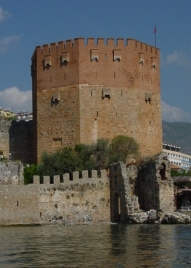
Kızılkule which is an Seljuk creation of 13th century was built in 1226 for a military purpose in order to keep the harbour under control. This monumental structure is one of the matchless samples of the Seljuk Art; it is the symbol of Alanya and at the same time its museum of Ethnograpy.
The creations such as rugs, carpets, clothes, kitchen gadgets, guns, weights, lighting equipments, tappet looms that are peculiar to Alanya region and tents which reflect the yörük culture have all ethnographic values and they are exhibited.
Alanya İl Kültür Turizm Müdürlüğü ve Alanya Belediyesi |